Showing posts with label narrative nonfiction. Show all posts

Saturday, August 17, 2013

unusual forms and formats in NF


Here is some nonfiction that presents itself in different format (one is a moveable lift-the-flap book for example, a fictional narrative with lots of spelling in it, too) and forms. Kids of all ages need to see that NF is a complex and layered genre, pone not easily defined (hence, we define it by what it is NOT).

BEATRICE SPELLS SOME LULUS AND LEARNS TO WRITE A LETTER by Cari Best with illustrations by Giselle Potter. FSG, 2013. Spelling is "spelling Bea's" favorite sport.

WALK THIS WORLD by Lotta Nieminen. Candlewick Press, 2013. Lift the flaps and see what is going on in different cities around the world.

FROG SONG by Brenda Guiberson with illustrations by Gennady Spirin. Holt, 2013. Learn about various species of frogs, their habitats, and their songs.

Wednesday, August 14, 2013

Nonfiction All Over the Map


As nonfiction of all types and forms and formats continues to grow, it willbecome harder and harder to pigeonhole it. My response to this dilemma is GOOD! Lines between and among genre, categories, forms, formats, etc. are more than blurred; some of them are nonexistent as these books demonstrate.


MYSWEENEY'S PRESENTS: THE GOOD: DOZENS UPON DOZENS OF GAMES, COMICS, PUZZLES, AND OTHER DIVERSIONS ALL COOOKED UP BY THE BEST BRAINS IN CHILDREN'S BOOKS by, well, lots of wonderful authors. Candlewick Press, 2013.


TOILET: HOW IT WORKS by David Macaulay. Macmillan, September 2013.

THE TIGER CUBS AND THE CHIMP: THE TRUE STORY OF HOW ANJANA THE CHIMP HELPED RAISE THREE BABY TIGERS by Bhagavan Antle with Thea Feldman with photos by Barry Bland. Holt, November 2013.

PAPA IS A POET: A STORY ABOUT ROBERT FROST by Natalie Bober with illustrations by Rebecca Gibbon. Holt, October 2013.

Saturday, August 10, 2013

Dinos Galore!


HOW BIG WERE DINOSAURS? by Lita Judge. Roaring Brook Press, August 2013.

THE GREATEST DINOSAUR EVER by Brenda Z. Guiberson with illustrations by Gennady Spirin. Holt, October 2013.

THE BIG GOLDEN BOOK OF DINOSAURS by Robert Bakker with illustrations by Luis Rey. Golden Book, 2013.


So, all you looking for books for meeting CCSS standards, here I a trio that, used together, will provide for some interesting material for classroom lessons. Compare and contrast illustrations in terms of media and style. Examine how the texts are different from one book to another. From informational text to narrative nonfiction to books that use a more fanciful blend of fiction and fact: this demonstrates that simply using the term nonfiction will never suffice.

Friday, August 9, 2013

Mad Potter


THE MAD POTTER: GEORGE E. OHR, ECCENTIC GENIUS by Jan Greenberg and Sandra Jordan. Roaring Brook Press, October 2013.

George Ohr's incredible creations were hidden from sight for years. Greenberg and Jordan trace his path to the potter's wheel, a device that freed his creative spirit to experiment with form and design. Ohr took his creations to fairs and local shows and sold them by hand. He invited visitors to his studio inside to see more of the pots and sculptures. Many more became "lost" when Ohr retired from pottry. Now, a new generation can see how form and function and design were pushed to the limits by this more than a little eccentric artist.


Wednesday, August 7, 2013

Animals fact and fiction


SQUIRRELS ON SKIS by J. Hamilton Ray with illustrations by Pascal Lemaitre. Random House 2013.

THUMPY FEET by Betsy Lewin. Holiday House, 2013.

OFF WE GO: A BEAR AND MOLE STORY by Will Hillebrand. Holiday House, 2013.

TURKEY TOT by George Shannon with illustrations by Jennifer Mann. Holiday House 2013.

BEST FOOT FORWARD: EXPLORING FEET, SLIPPERS, AND CLAWS by Ingo Arndt. Holiday House 2013.


BEAVERS by Gail Gibbons. Holiday House 2013.

Fins, flippers, claws, toes, teeth, tails: all these books present animals in action. Pairing the fiction (Lewin, Hillebrand, Ray, Shannon) with the nonfiction (Arndt, Gibbons) during story time or bedtime reading shows kids that books can inform or entertain and sometimes accomplish BOTH tasks.

Thursday, April 4, 2013

Blurring Lines


AFRICA IS MY HOME: A CHILD OF THE AMISTAD by Monica Edinger with illustrations by Robert Byrd. Candlewick, 2013.

Here is a book, based squarely on much detail and research and fact, that takes readers into a story of one of the children transported aboard the Amistad. Part history, part nonfiction part story, readers will meet Margru, a young girl who is transported to America as a slave and who manages to return to Africa eventually as a teacher. Edinger has fashioned a story that reminds us all of the squallid conditions and harsh treatment of those captured and held as slaves. The lines between genres and forms and formats are creating wonderfully new books for readers of all ages; this is certainly one to share aloud with students. Robert Byrd's illustrations, soft and pastel, reveal yet another story underneath the traditional narrative, too.

Thursday, October 25, 2012

I want to ride my bicycle...I want to ride my bike


WHEELS OF CHANGE by Sue Macy. national Georgraphic, 2011.

Sue Macy is one of the top writers of nonfiction out there today. In this book she explores the history of the bicycle especially as it relates to the way bikes freed women. From the dangerous and silly sidesaddle bicycle designs to bikes made to work with women's anatomy, Macy chronicles the changes in the development of the bicycle. Along the way she discusses music, fashion, and other cultural aspects of the bike. <577>


Saturday, September 29, 2012

Growing Readers


SEED BY SEED: THE LEGEND AND LEGACY OF JOHN "APPLSEED" CHAPMAN by Esme Raji Codell with illustrations by Lynne Rae Perkins. Greenwillow, 2012.

Anyone looking for a text to share with children, especially one whose language sings even as it is discussing the real life exploits of John Chapman should look no further. This stunning combination of beautiful illustrations in deep, vibrant earth tones along with the careful wordsmithing makes this a must have. Codell begins by transporting readers back to a time when planes and phones were not heard, when it was possible to hear a wagon wheel "straining against the ruts in a road." Back then a young man named John Chapman said he had been called to be a messenger of peace and to offer fruits to those travelling west. And so begins the legend of Johnny Appleseed. "Use what you have," "make peace where there is war," and other ways to live are what ruled Chapman's actions. Codell tells of his acts with lyrical language that rivals the growing landscape. The book ends with a question: "What seed will you plant?" Pair this with MISS RUMPHIUS for a lovely call to action even among the youngest who can make changes in this world.

<522>

Thursday, September 6, 2012

Narrative Nonfiction


IF YOU SPENT A DAY WITH THOREAU AT WALDEN POND by Robert Burleigh with illustrations by Wendell Minor. Holt, November 2012.

Thoreau at Walden
Surely the best adventure
A young boy could have.

<479>


SEAHORSES by Jennifer Keats Curtis with illustrations by Chad Wallace. Holt, September 2012.

The life of seahorses
From small fry to fully grown
Living in the sea.

<480>


LENORE FINDS A FRIEND: A TRUE STORY FROM BEDLAM FARM by Jon Katz/ Holt, September 2012.

Poor Lenore the dog
All she wants is a good friend.
Brutus, the ram, friend?

<481>


FROM THE GOOD MOUNTAIN: HOW GUTENBERG CHANGED THE WORLD by James Rumford. Roaring Brook Press, September 2012.

Paper, ink, and press
Bring books to many to read
And cherish and own.

<482>

Thursday, August 9, 2012

Narrative Nonfiction Takes It Up a Notch


PLUTO VISITS EARTH by Steve Metzger with illustrations by Jared Lee. Scholastic/Orchard Book, 2012.

When Pluto is downgraded to a dwarf planet, it heads down to earth to file a complaint with the astronomers. Along with the humorous look at why the other planets will not accompany Pluto on his mission, readers will gain some knowledge about planets and now they are classified. <429>


OCEAN SUNLIGHT: HOW TINY PLANTS FEED THE SEAS by Molly Bang and Penny Chisholm with illustrations by Molly Bang. Blue Sky Press/Scholastic, 2012.

Breathtaking illustrations in various shades of blue show how the food chain operates in the ocean and how it depends on sunlight to work. <430>


FARM FRIENDS by Wendell Minor. Putnam, 2012.

In short verses, Minor takes readers through the farm introducing them to the farm animals. Cows, pigs, cats, turkeys, and lambs seem to jump right off the page.
<431>


APPLES A TO Z by Margaret McNamara with illustrations by Jake Parker. Scholastic, 2012.

This alphabet book includes various aspects of the apple including where they are grown (in all 50 states) and how they can be used. <432>

Sunday, March 11, 2012

All you could ever want to know about BLOOD...


Narrative nonfiction is in demand, and here is a topic sure to appeal to the bloodthirsty readers in your school/library. THE BOOK OF BLOOD: FROM LEGENDS AND LEECHES TO VAMPIRES AND VEINS by HP Newquist (Houghton Mifflin, August 2012) walks readers through how we learned about the circulatory system to how blood travels through our bodies to how hard blood works (no wonder I am tired). Adding in some of the myth and lore about vampires and other bloodsuckers makes for interesting and informative reading. Science teachers will find this invaluable. <117>

Friday, March 2, 2012

nonfiction


SURYIA SWIMS is subtitled THE TRUE STORY OF HOW AN ORANGUTAN LEARNED TO SWIM. Authors Bhagavan Antle and Thea Feldman with photographer Barry Bland (Holt, May 2012) show Suryia in the bathtub and then later in the swimming pool. Suryia is, as far as scientists know, the only orangutan to take to the water and swim. He swims with all manner of other animals including tigers and a dog. Suryia and the other animals in the book reside on an animal preserve. <92>


MACHINES GO TO WORK IN THE CITY by William Low (Holt, June 2012) has multiple flaps throughout the books that kids can open to see more of the crane, bulldozer, or vacuum truck. Many of these machines may be unfamiliar to readers, so this will serve as a good introduction to the machines that help keep our city running. <93>


LEOPARD AND SILKIE: ONE BOY'S QUEST TO SAVE THE SEAL PUPS by Brenda Peterson with photographs by Robin Lindsey (Holt/Ottaviano, April 2012) is about the quest to save seal pups who are often abandoned by their mothers when humans crowd around them. These two seal pups are protected by a citizen's group known as Seal Sitters. Their task is to keep the seals safe from predators and from the humans who are incredibly curious about them <94>

Friday, February 24, 2012

Raise a Joyful Noise


FREEDOM SONG: THE STORY OF HENRY "BOX" BROWN by Sally M. Walker with illustrations by Sean Qualls (Harper 2012)is based on the story of Henry Brown who literally mailed himself to freedom. Walker tells of Henry's love of song, from the songs he sang in the fields where he was a slave to the love songs he sang to his wife to the songs he shared with his family. When his family is taken from him and sold, Henry ships himself to Pennsylvania and freedom. Walker's rhythmic language and Qualls' collage paintings combine to make this a terrific read aloud experience. <77>

Thursday, February 16, 2012

Citizen Scientists


Loree Griffin Burns' CITIZEN SCIENTISTS: BE A PART OF SCIENTIFIC DISCOVERY FROM YOUR OWN BACKYARD (Holt 2012) is a prime example of the power of narrative nonfiction. Burns explains how ordinary people, including children and teens, can play an essential role in the study of nature and the environment. From bird watching (and counting) to tagging butterflies, to tracking ladybugs, we can all help scientists by providing much needed data. Data about migration, about species variation, and other factors might assist scientists in their studies of species and their habitats. Burns accomplishes all this in a straightforward narrative that describes the efforts of these citizen scientists and then offers suggestions to readers about how to become involved. Detailed appendices provide more information as well. <163>

Monday, February 6, 2012

new nonfiction series

Scholastic has a new series of nonfiction books for young readers entitled "Discover More." In addition to the individual titles in the series, each book also has a free digital book download that extends the contents of the traditional book itself. Here are three titles from the series.


SEE ME GROW by Penelope Arlon (Scholastic 2012) looks at various species and how they grow. Sharks, rabbits, bees, alligators, and more are in separate "chapters" accompanied by clear, detailed photographs and other visuals. The free download for this book is called SEE ME GROW FUN! A code is provided within the book for the download. <48>


PENGUINS by Penelope Arlon (Scholastic 2012) examines the lives of penguins. Chapters are devoted to the different species of penguins and their habitats and habits. The photography in incredible in each of the books in this series. <49>


FARM by Penelope Arlon (Scholastic 2012) looks at life on farms of many types. Farm equipment, machines, animals, and much more fill the chapters in this book intended for very young readers. <50>

Monday, January 30, 2012

Narrative Nonfiction


THE MYSTERIES OF ANGKOR WAT by Richard Sobol (Candlewick Press 2011) takes readers into the ruins of Cambodia's ancient temple. Built almost 1000 years ago, the temple is a tribute to the ancient civilization that built it and, eventually, seems to have disappeared. Sobol, a photographer, includes detailed photographs that show not only the temple but the people, particularly the children, of Angkor Wat. <36>

Wednesday, January 25, 2012

unusual ranch hands


THE GUARDIAN TEAM: ON THE JOB WITH RENA AND ROO by Cat Urbigikt (Boyds Mills Press 2011) presents the unusual tale of a mule and a dog who work a ranch in Wyoming. Rena and Roo both help guard the sheep from predators. This unlikely relationship began slowly as the two gradually became used to each other's presence and then the presence of their flock. Beautiful photographs accompany the spare text. <29>

Thursday, January 12, 2012

more nonfiction for the new year


TITANIC SINKS by Barry Denenberg (Viking 2011) will transport readers to the time and place of the sailing and eventual sinking of the Titanic. Denenberg uses primary source documents (logs, newspaper stories, etc.) to set the stage for the events leading to the destruction of the ship once deemed indestructible. <4>


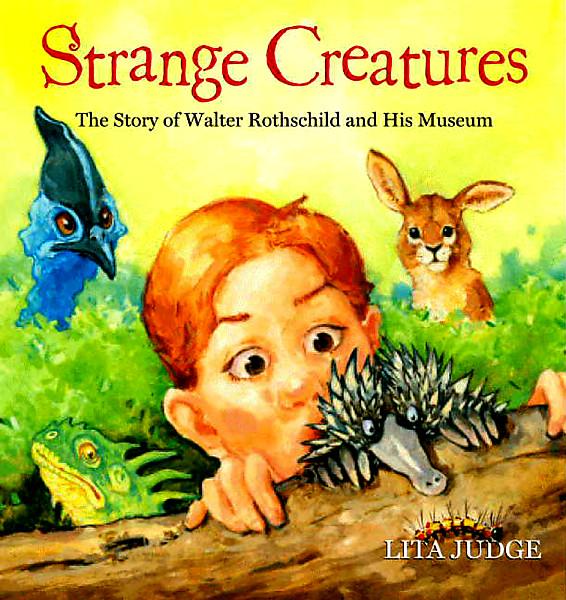
STRANGE CREATURES: THE STORY OF WALTER ROTHSCHILD AND HIS MUSEUM (Disney Hyperion 2011) is a biography of a man who dreamed as a child about a museum that would contain his collections as well as various species of animals. Rothschild was the son of one of the bankers for Queen Victoria. He viewed his son's interest in nature as something that needed to be squashed. Walter, however, persevered in his pursuit of knowledge of the natural world and eventually realized his dream of opening his own museum <5>

Wednesday, January 11, 2012

nonfiction picture books

Here are some more excellent books to use with kids in various content areas. Narrative nonfiction is am important element of the new state test for kids in Texas (and elsewhere) and these will give readers some experiences with narrative nonfiction text 9and illustrations).


RESCUING ROVER: SAVING AMERICA'S DOGS by Raymond Bial (Boyds Mills 2011) will provide insight for readers into how America has come to have such a problem with too many dogs abandoned and abused. Bial discusses puppy mills, pet stores, breeders, humane societies and other aspects of this topic in clear and concise text. <1>


Catherine Clinton's WHEN HARRIET MET SOJOURNER (Amistad 2011, illustrated by Shane Evans)presents information about Harriet Tubman and Sojourner Truth and the roles they played in helping to free slaves and win rights for former slaves. The two women met once and, though no one was present to record the meeting, Clinton imagines what that historic meeting might have been like given the nature of the two women. <2>


A young boy asks about the mule eating the greens in a nearby garden. In response, the owner of the garden and caretaker of the mule tells him about BELL, THE LAST MULE OF GEE'S BEND (Candlewick 2011). Calvin Ramsey and Bettye Stroud (with illustrations by John Holyfield) introduce readers to the efforts of Dr. King to get the voters from Gee's Bend to the polls and the role played by Belle and other mules to transport wagons filled with African Americans to the polls. Belle was also selected as one of the mules to pull the wagon with Dr. King's coffin following his assassination. <3>

Friday, January 6, 2012

Evolution


Laurence Pringle is a master of narrative nonfiction. In BILLIONS OF YEARS, AMAZING CHANGES: THE STORY OF EVOLUTION, illustrated by Steve Jenkins (Boyds Mills Press 2011), Pringle explains in clear and concise language all of the elements of evolution. He reviews the work of Darwin and Mendel and Crick and Watson among others and discusses how their discoveries and observations have all contributed to our understanding of how evolution works. Science teachers would do well to use this book to supplement (or even supplant) the chapter on evolution in the textbooks. <699>